
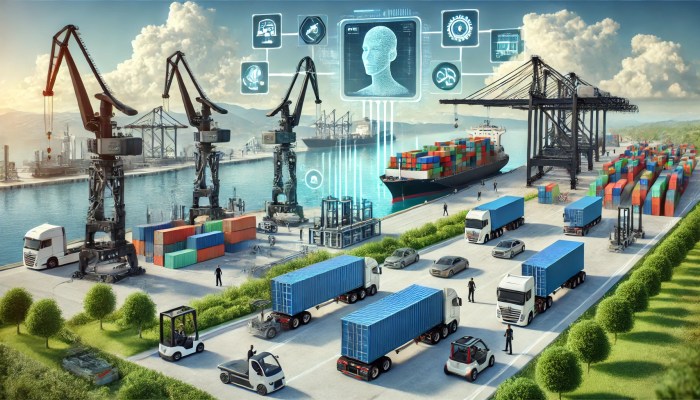
The recent longshoremen’s agreement has brought critical issues into focus, particularly the union’s demand to exclude automation and artificial intelligence (AI) from port operations. While this stance reflects a legitimate concern about job security, it also raises broader questions about the balance between protecting workers, embracing technological innovation, and addressing societal impacts. Here’s a closer look at these intertwined issues.
Worker Compensation and Union Advocacy
Labor unions, such as the International Longshoremen’s Association (ILA), play an essential role in advocating for fair wages, improved healthcare, and better working conditions. The recent strike along the East and Gulf Coasts demonstrated the union’s ability to secure significant gains, including wage increases and enhanced benefits over six years. These outcomes are vital for workers grappling with rising living expenses. (Source: AFL-CIO)
However, the union’s firm opposition to incorporating AI and automation has sparked debates. While this resistance aims to protect jobs, critics argue it could hinder innovation, reduce efficiency, and impact the economy at large. The challenge lies in achieving a balance that safeguards workers while allowing progress. (Source: Economic Policy Institute)
Environmental and Public Health Concerns
Ports are critical economic hubs, but they are also major sources of pollution. Diesel-powered trucks, cranes, and ships contribute significantly to air pollution, affecting both workers and nearby residents. Exposure to these emissions has been linked to respiratory diseases, cardiovascular problems, and even cancer. (Source: EPA)
Technological solutions, such as electric-powered equipment and AI-driven systems, could help mitigate these environmental impacts. For instance, automated systems can streamline operations, reducing idle times and emissions. However, implementing these innovations requires collaboration among unions, employers, and policymakers. (Source: Journal of the Air & Waste Management Association)
The Role of AI and Automation
AI and automation offer transformative potential for port operations by:
- Boosting Efficiency: Automated cranes and AI-driven logistics systems can handle cargo faster and with greater accuracy than manual processes, reducing delays and errors. (Source: McKinsey)
- Enhancing Safety: By automating hazardous and repetitive tasks, these technologies can minimize workplace accidents and improve worker safety. (Source: OSHA)
- Lowering Emissions: AI can optimize traffic flow within ports, reducing vehicle idle times and cutting emissions. (Source: MIT Technology Review)
Despite these benefits, fear of job loss remains a major obstacle. Integrating AI in a way that complements human labor—rather than replacing it—could alleviate these concerns. Programs focused on retraining and upskilling workers can prepare them for new roles in a technologically advanced environment. (Source: World Economic Forum)
Government Intervention and Public Interests
The government plays a pivotal role in ensuring that critical industries operate smoothly while safeguarding public health and economic stability. When labor agreements restrict progress in ways that could harm the public, intervention may be warranted. Federal agencies could, for instance, require the adoption of cleaner technologies to address pollution, even if it necessitates revisiting certain contractual provisions. (Source: U.S. Department of Labor)
Financial incentives, such as grants or tax breaks, could also encourage ports to adopt sustainable technologies while maintaining job security. Achieving these outcomes requires collaborative efforts among unions, employers, and policymakers. (Source: Brookings Institution)
Moving Forward: A Balanced Approach
The longshoremen’s agreement underscores the complexities of balancing labor rights, technological advancements, and public health. A path forward must involve:
- Job Protection: Ensuring workers are not displaced by automation through robust retraining and skill development programs. (Source: International Labour Organization)
- Sustainability Initiatives: Adopting cleaner, more sustainable technologies to reduce environmental and health impacts. (Source: United Nations Environment Programme)
- Collaborative Efforts: Encouraging open dialogue between unions, employers, and policymakers to address shared challenges. (Source: Harvard Business Review)
By addressing these priorities, ports can evolve into efficient, safe, and environmentally sustainable hubs that benefit workers, businesses, and surrounding communities alike.
This blog post was created with the help of Pi and ChatGPT. This was a discussion I had with Pi during an episode on my podcast: Matt & Pi talk about stuff. I tried having Pi write this blog but it was not quite enough for what I wanted so I took the transcript of the section when me and Pi were talking about the longshoreman and put it into ChatGPT and had it write the blog and make the picture.
 Matthew Lesseg media